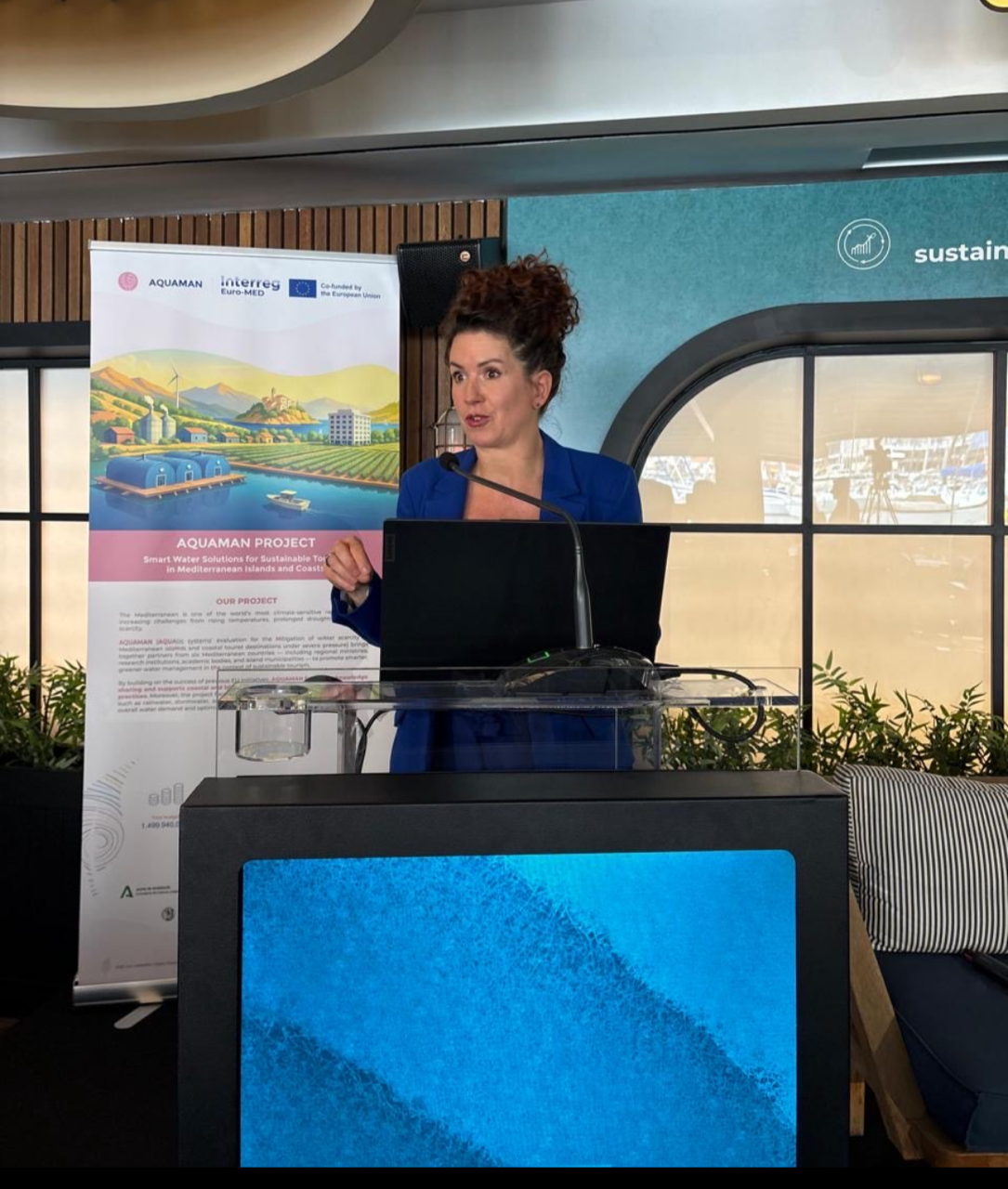

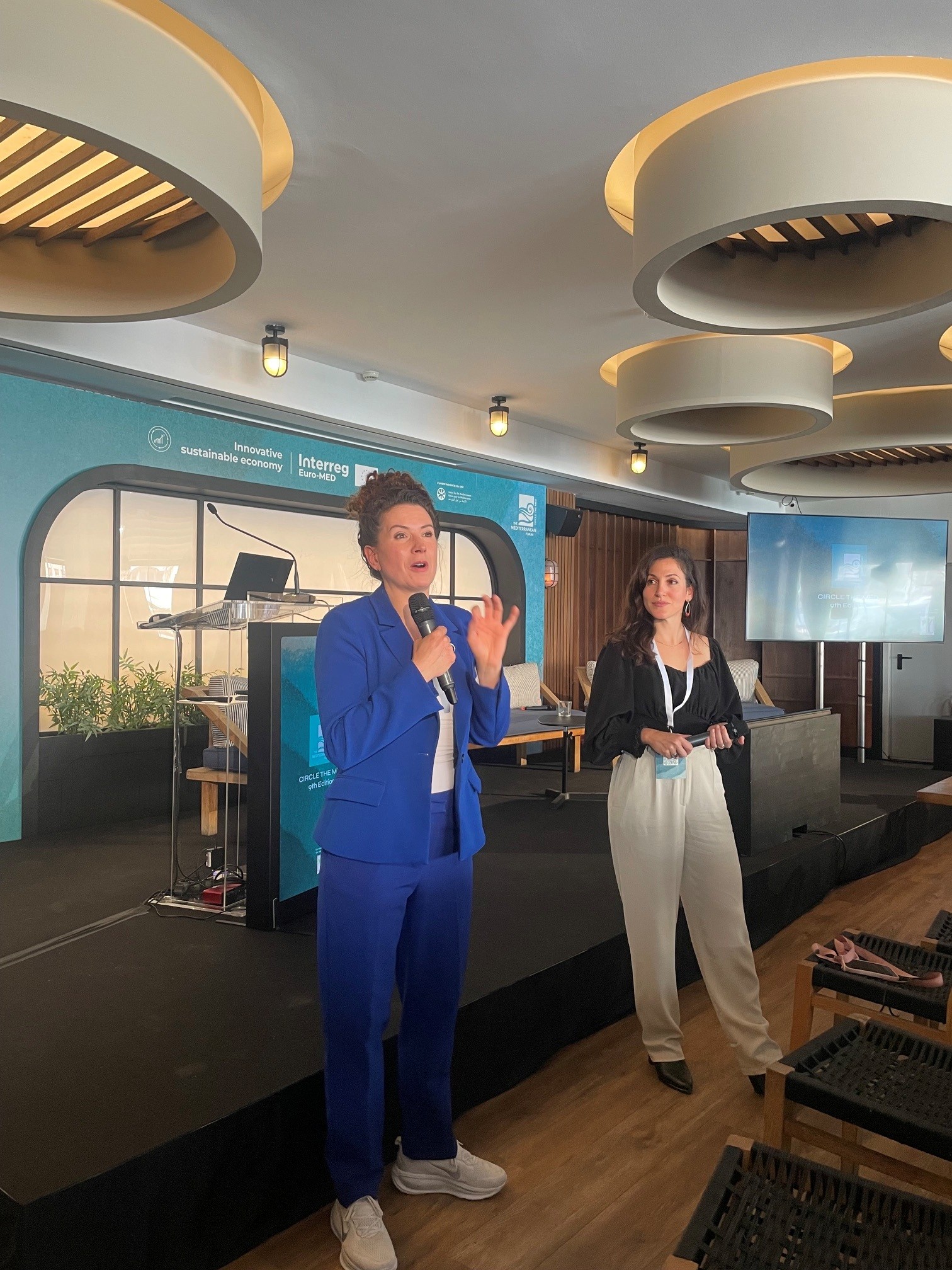
Kata Tüttő, president of the European Committee of the Regions, opens a youth-led discussion on water resilience and climate adaptation.
The AQUAMAN International Workshop on Water Scarcity Mitigation in Tourist Destinations took place on Tuesday, 19 May, addressing one of the most critical climate challenges facing Mediterranean islands and coastal areas. Hosted by the partner National Technical University (NTUA) of Athens at the Piraeus Sailing Club in a dynamic hybrid format, the event brought together key European projects, policymakers, and experts under the frame of the Circle the MED Forum 2026, successfully organized by the partner European Public Law Organization (EPLO).
The workshop demonstrated that transnational cooperation is the ultimate tool for building long-term water resilience in tourist-heavy regions. A major highlight of the day was the “Voices for Water Resilience” Youth Session, which provided a platform for the next generation to voice their future visions regarding water-scarce environments. The session started with a keynote address from Kata Tüttő, President of the European Committee of the Regions, and was moderated by Alexia Spyridonidou from the European Public Law Organization (EPLO). Young representatives (a majority of students from the National Technical University of Athens) took center stage to actively challenge the morning’s conclusions, propose alternative perspectives, and outline actionable ideas to engage youth in ongoing climate resilience efforts.
Strategic policy and innovative solutions: Inside the panels
The workshop kicked off with welcome addresses featuring featuring Evanggelos Fragkakis (Mayor of Chalki, Greece), Pascale Faveau-Lagaye (Project Officer of the Interreg Euro-MED Programme). Following the opening, the morning was split into two high-level thematic sessions:
Policy & governance for water scarcity mitigation
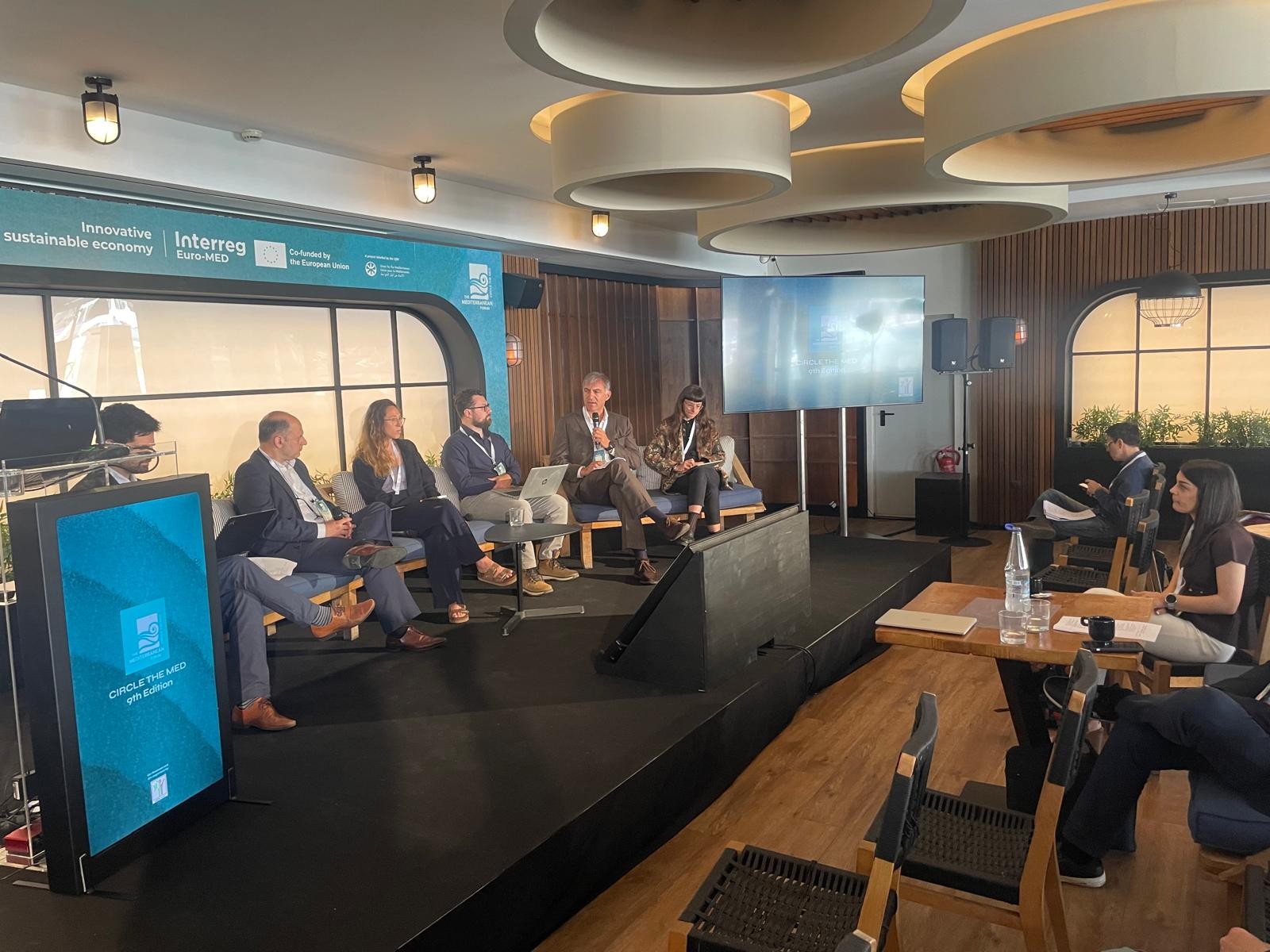
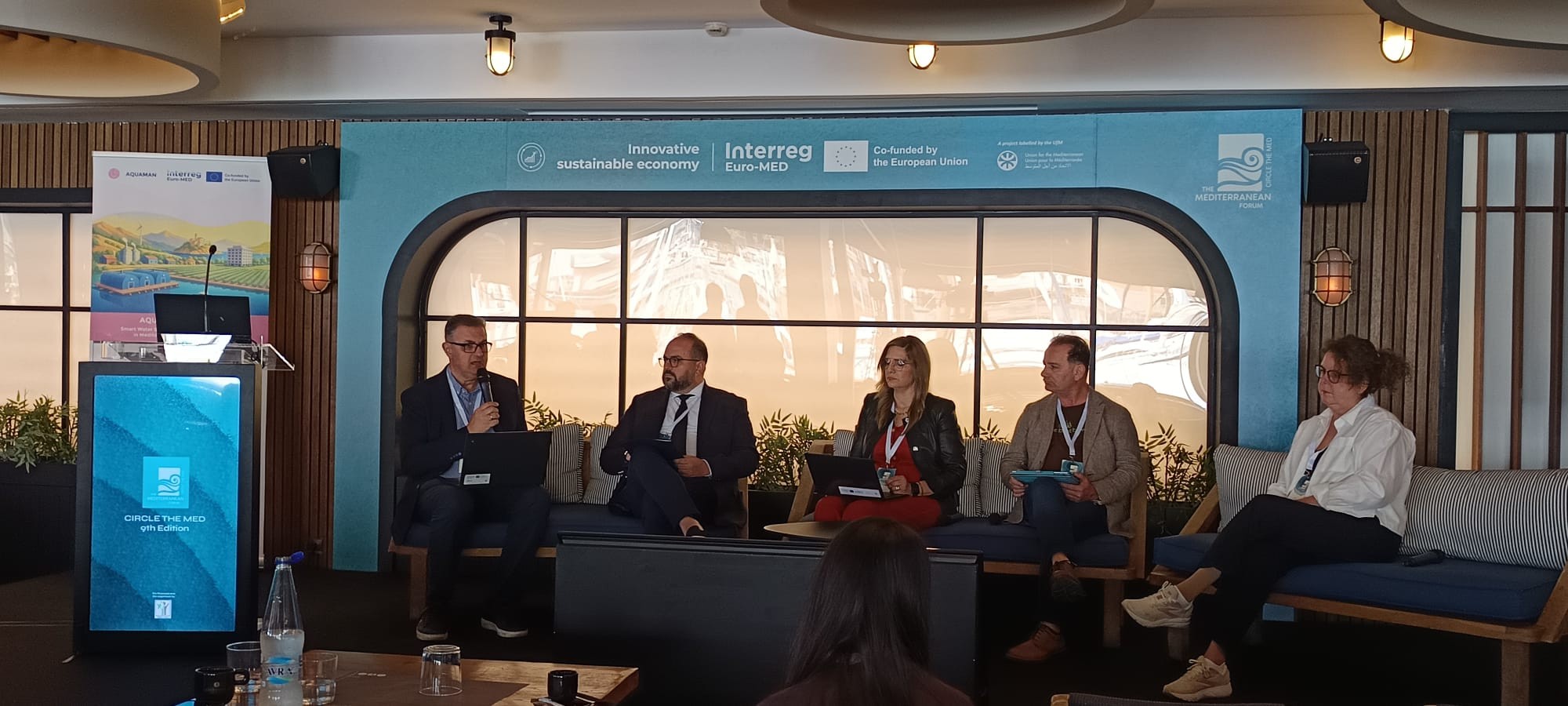
The first panel on policy and governance for water scarcity mitigation was moderated by Athanasios Kalogeras (Research Director at the Athena Research Center, representing the Interreg Euro-MED LIBECCIO Project), this session delved into strategic frameworks and governance models. Key topics included the MED policy instruments, the potential of the use of Nature-Based Solutions (NBS), the water reuse into urban planning, and transnational cooperation. The debate featured active institutional contributions from the General Secretariat for Insular Policy and the Aegean of Greece, the Regional Ministry of Tourism and Andalucia Exterior of Andalusia (Spain) representing the Interreg Euro-MED NaTour4CChange Project; El legado andalusí Andalusian Public Foundation (Regional Ministry of Culture and Sport of Andalusia, Spain) LP of the Interreg Euro-MED Dialogue4Tourism and AQUAMAN projects; and the Region of Occitanie (France) representing the Interreg Euro-MED HERIT ADAPT project.
Technical and innovative solutions for sustainable water use
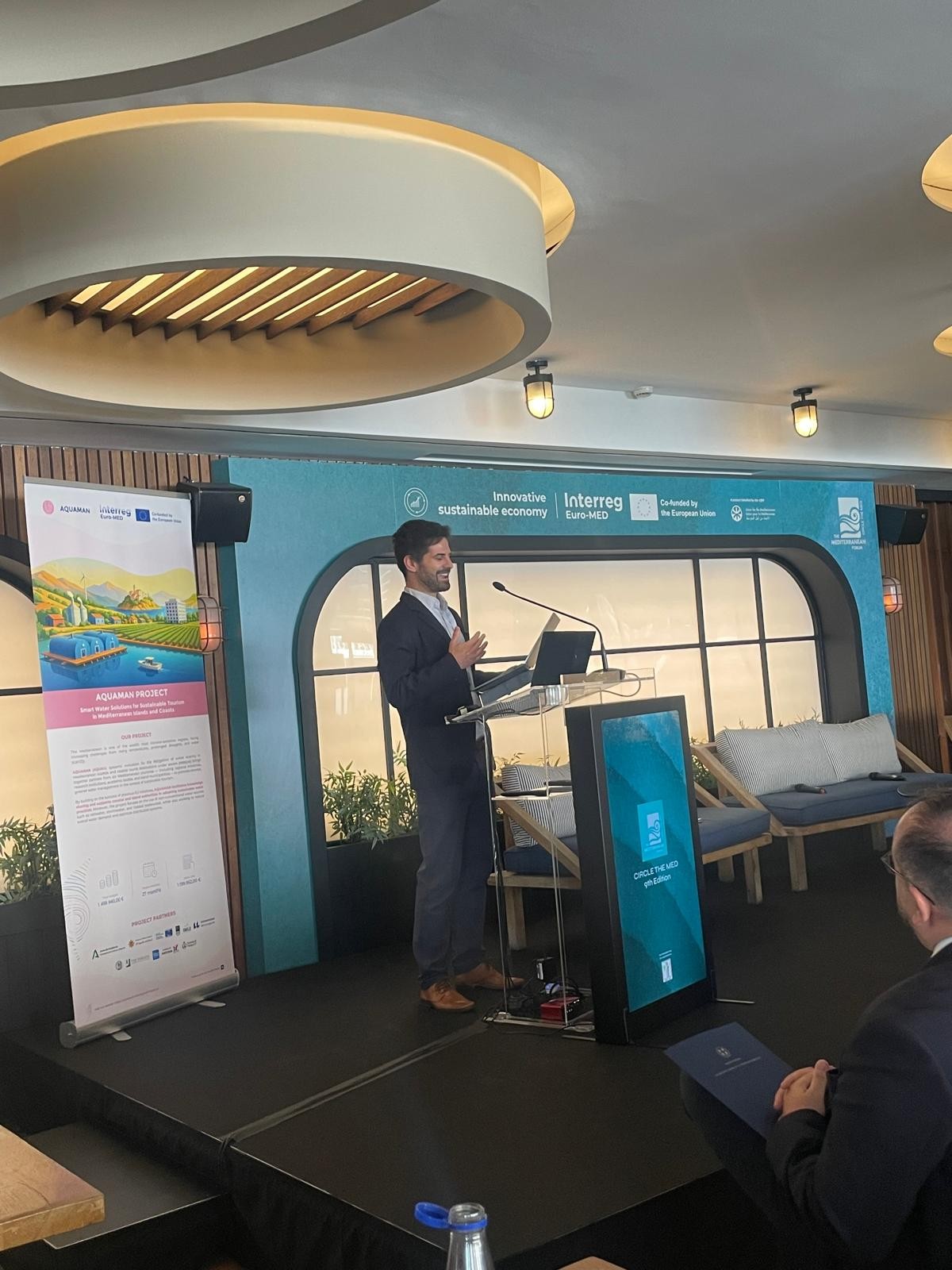
The second session transitioned from policy to practice, centering around the official presentation of the AQUAMAN Project’s “Blue Horizons” catalogue of transferable solutions. Moderated by Tadej Stepišnik Perdih (National Technical University of Athens), panellists debated the feasibility, implementation challenges, local uptake, and replicability of innovative water solutions in coastal and islands contexts. The technical exchange brought together an important array of Mediterranean projects and initiatives, with actions shared by the National Technical University of Athens representing the CARDIMED project as well; the Barcelona Provincial Council representing the Interreg Euro-MED Community4Tourism project; the Energy Water Agency Malta (Interreg Euro-MED AQUAMAN, SHARE and MedWATER projects); Impact Hub Athens representing the VERNE project, and the University of Tor Vergata (Italy) representing the NEXUS-NESS project.